

This post may contain affiliate links, meaning I make a commission if you purchase through my links, at no extra cost to you. Disclosure here.
One day I realised I just couldn’t keep on top of my home anymore.
You know when you reach the point where getting dressed in the morning annoys you? How many items that don’t fit or flatter can you pull out between 7:52 and 7:55 a.m.?
What about when you scour through the filled cupboards to find your favourite mug, or when you can’t find your kids’ sports shoes because they’re stuffed in the under-stairs cupboard of doom? You reach a point when you say, ‘Enough!’
When I reached this point, I started to declutter.
Did I know what I was doing? No.
Did I at least have a plan? Also no.
But somehow, I ended up here: a minimalist (or somewhat of a minimalist).

In this article, I want to share with you the 7 lessons I learned through the past year or so of implementing minimalism in my life.
Keep reading below or watch the video:

1. I don’t need to be extreme to feel the benefits.
I’m not here to win any sort of minimalism contest. And I don’t want to be the most extreme, nor the one who has the least.
Sometimes it feels like it’s a bit of a competition between people, especially on YouTube, and even in the comments. Once you mention the word ‘minimalism,’ some people will say, ‘You still have too many items to be calling yourself a minimalist.’
I think this is why some people started calling themselves ‘minimal-ish’ or ‘minimalist-ish’. Because once you mention the word minimalism, it often happens for people to have this expectation that now you only own one fork, one plate, one cup, and that’s it. However, that’s not the case.
Minimalism is a spectrum. Some people own a bit more maybe because it makes their life more convenient, but they still apply minimalism concepts in their lives. Some people prefer to go more extreme and own only the very bare necessities. Is one of them wrong? No. Everybody’s different.
Over the last year or so, I have applied more minimalism concepts to my life, and this has benefited my life a lot. Even if I’m not the most extreme, and even if we might have more items than an extreme minimalist would, that’s okay. It’s all about finding the right balance of stuff for you.
2. Done is better than perfect.
I used to think that I needed to get it done perfectly. I just needed to have the perfect storage solutions for each corner of my house, or I felt like I needed more storage space. Maybe you feel the same.
The truth is you just have to get started. It’s not about having the perfect aesthetic or the perfect-looking home; it’s just about making it more functional. And that usually means getting rid of some stuff.
The less we have, the less time we spend trying to manage it, clean it, return it, organise it, or move it from one place to another. This means we’ll have more time for the things that actually matter to us.
So, no, you don’t need to wait for that perfect storage solution. You just need to get started. Try to have less stuff, just the things you truly need and use, and that will make your life so much easier.
3. You can’t do it all in one go.
For many of us, myself included, having this big massive declutter done is just not realistic, is it? I’m a busy mom of two, and my decluttering has been done through small bursts here and there. I just can’t do a whole day decluttering around my kids.
The way that I have been decluttering my house over the past year or so is just through small bits here and there. I would pick 15 or 30 minutes, however much I had that day, and I would just tackle one little drawer, one little cupboard in my kitchen, maybe just pull out all the mugs and go through them quickly.
These kinds of tasks don’t take too long, but they will give you massive results in the long run. This is something I learned in the ‘Atomic Habits‘ book, which is a brilliant book. It mentions how doing these very small actions over long periods of time will give you massive results.
A lot of us, myself included, underestimate the power of tiny actions. But if you can get your home just 1% better every single day, a year from now, you probably won’t recognise your home. It will be in a much better state, so much easier to keep clean, and so much calmer.
4. Decluttering is not a one-and-done job.
I know, we kind of wish it was! We’d just do this big declutter and then that would be it—our houses will just stay clean and tidy forever. But it’s not really the case.
We bring a lot of stuff into our home every single week. Maybe our kids bring things from school or from a party, maybe we go to the shop and buy a few more clothes. It’s just inevitable that things will come into our houses.
This is why decluttering is not something you’re ever going to be fully done with. But once you do the bigger declutter and you get your home into a much more manageable state, decluttering just becomes part of your routine. It’s just going to be a little bit here and there to try to stay on top of it, and it’s not going to be overwhelming.
One thing I will also say is that the first time I started to really declutter my home, I had to do it in layers. I had to do it multiple times.
I would go over an area, for example, the TV unit and I would be happy with it for that moment. Then, in a few months’ time, I was ready to go through it again because I was in a place where I would notice other things that I could get rid of. Or I was able to be more realistic with myself when it came to my wardrobe.
Decluttering is more about building the habit. The more you exercise your decluttering muscle, the easier it’s going to get and the more confident you will be in your decision-making about what to keep and what to let go of. It’s just about practising. And like with any skill, you start small. It might not be great at first, but the more you do it, the easier it gets, and the better you will get at it. It will just become something more effortless.
5. Our stuff does not equal happiness.
This is probably contrary to every advertisement we see out there because we’re often made to feel like when we buy this product, we’ll get a bit happier or we’ll solve a problem in our lives.
But I think there’s a baseline we need to keep in mind here. In many cases, we start our homes from zero. We move into a place and there’s nothing around us. Start to fill it with furniture, with some items that make our life easier, and we buy plates and mugs.
We create this baseline of happiness in our home of convenience, where we have everything that we need. We have all the basics to function in our daily lives, and then we often feel like we need to add more and more and more on top of that. The more we add, the happier we will be or the easier life will get, right?
What actually happens though is that the more we add, the more we clutter our homes. We end up not making our lives more convenient, but actually making them harder.
What we need to do is just get back to that baseline. Keep the things that we need, the ones that we love, the items that make us smile, that bring us joy, and get rid of the rest. We just need to be at that baseline where it’s easy to tidy our homes, but we still have the things that bring convenience to our lives.
6. I’m most likely not going to regret decluttering a specific item.
Regretting decluttering an item is a fear that many of us have as we go through this process: “What if I let go of this item and two months from now I realise that I need it?”
In my case, being on this minimalism journey, I honestly don’t think I regret getting rid of any item. And I can’t even remember most of them because it was stuff that wasn’t truly bringing value to my life.
But let’s say that you do end up realising that you actually really needed that item that you got rid of. Chances are, it will be quite easy to replace it. And it’s not going to be wasteful. You’re not going to go out and buy again all of the items you decluttered.
If it’s one item you miss, you can always repurchase it, borrow it from somebody, or get it pre-loved. There are lots of options out there, but most items are replaceable.
And if you’re not entirely sure if you should keep a certain item or let it go, I always recommend the ‘decide later bin.’ Put things in a box or a storage bin, and put them out of sight, and see if you miss them.
If you are not going back to look for them, that’s a good sign that you can probably let them go.
7. A decluttered home means spending less time cleaning and stressing
I actually didn’t know this when I started decluttering, but I have been spending way less time cleaning, getting stressed about my kids creating messes, or just generally being stressed about housework. As a mom, this is probably a big thing we struggle with, don’t we? With our house, with the state of it, and keeping on top of it.
The less inventory we have to manage, and the less stuff is in our house, the easier it is to clean.
If a surface is not filled with hundreds of items, it’s very easy to dust away. If the floor is not covered in piles of laundry or toys, it’s very easy to hoover and mop. And that’s what it’s all about for me.
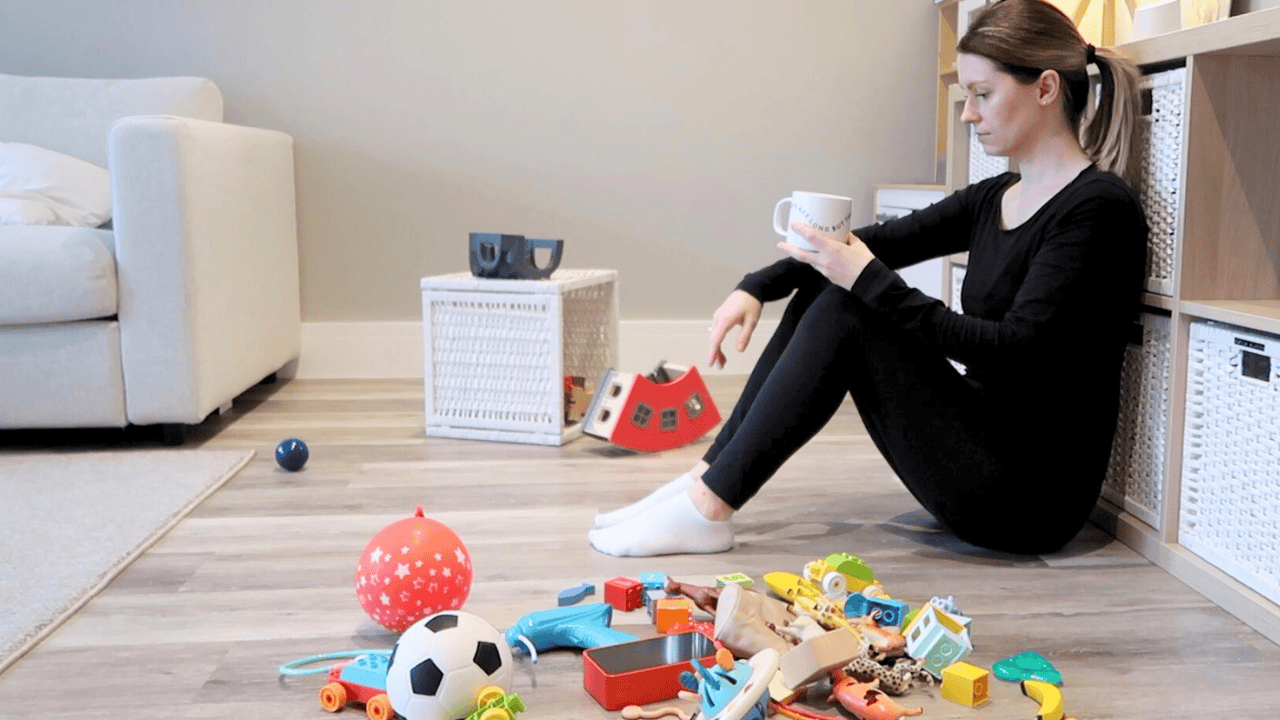
I wanted to be more present with my kids. I didn’t want to be constantly stressed by the mess on the tables or the toys on the floor. Now even if my kids get all of their toys out, it’s no longer a big deal. We all know where everything goes back to its home, be it a basket or a spot, and we can all tidy together. It’s so much easier to tidy up now.
This is what decluttering does, it makes your life so much easier. I hope this article inspired you and maybe gave you the nudge you needed to take the first small step towards decluttering your home too.

Leave a Reply